
Why choose OSL for my dosimetry lab ?
Discover the OSL LANDAUER dosimetry offer. It covers the entire manufacturing and processing of dosimeters with a wide range of equipment such as: badges, readers, zeroing devices, software, etc.
OSL benefits
- A complete lab solution in a compact size
- A full range of dosimeters adapted to measure Hp(10), H*(10), Hp(3) and Hp(0.07)
- Scalability from 1 to 700 InLight dosimeters for one process
- No heating parameters to control
- No gas supply
- Fast reader throughput of 300 dosimeters / hour
- Quality, simply and reliability
- Remote diagnostic and maintenance
- Dose assessment algorithm embedded
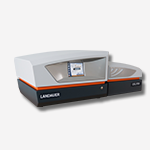
Dosimeter reader
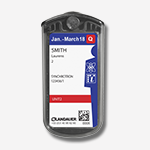
Wholebody, wrist and area dosimeter
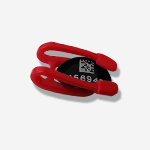
Lens of eye dosimeter
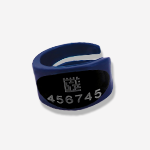
OSL ring dosimeter
| OSL | TLD | |
| Dose Deposition | Electron/hole capture at site of dosimetric traps in crystalline structure | Electron/hole capture at site of dosimetric traps in crystalline structure |
| Readout Mechanism | Optically-Stimulated Luminescence | Thermally-Stimulated Luminescence |
| Precision | Very good. Stable sensitivity | Very good*. Sensitivity changes with heating and annealing. Irradiator required |
| Accuracy | Very good to Excellent | Poor to good* |
| Readout speed | ≈ 1 second | ≈ 10 seconds |
| Re-read capability | YES | NO, single-read only |
| Operational overhead (man-hours, equipment) |
Low (stable sensitivity, no nitrogen, no heating…) | High (need to source pure nitrogen, frequent maintenance) Replacement and management of Irradiator radioactive source |
| Mechanical resistance | Thin PET film resistant to crushing | Sensitive to crushing TLD crystal may come back broken altering the sensitivity |
| Influence of neutron dose | No influence | Under high neutron dose, photon dose reported will be over estimated |
* Requires very stringent procedural controls to achieve good results.
Which solutions for your OSL lab?
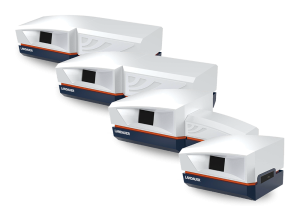
Three versions are proposed to read INLIGHT dosimeters using LANDAUER OSL technology.
OSLR readers perform both reading and annealing process with higher throughput making it quick and easy to process results. The readers OSLR 1, 50, OSLR 250 and OSLR 700 adapt to the number of monitored participants in your organization. The readers can easily be upgraded to a higher loader capacity to accommodate evolving needs.
OSLR is upgraded to read the new ONYX OSL ring and TOPAZ OSL lens of eye dosimeters which use the new generation of OSL sensor: MP7 sensor.
OSL: the measure of luminescence
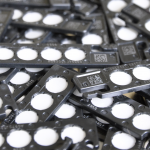
Within a number of materials, the electrons and holes produced during radiation exposure can become trapped at crystal defects. The trap remains until they are stimulated giving rise to optical emission. The intensity of the optical emission is a function of the radiation exposure and the method/intensity of the stimulation. If the trapped charges are excited by thermal stimulation (thermoluminescence) then most of them are released and any record of the radiation exposure is lost. However, if the trapped charges are optically stimulated, only a small fraction of the trapped charge is released. The process is optimised by the frequency and duration of the stimulating light pulses, the characteristics of the photomultiplier used to detect the emitted light, and the material used as the OSL detector.
During readout, only a small fraction of the trapped charges are released. Thus, much of the trapped charge is retained following stimulation and may be released in subsequent stimulations. This enables INLIGHT dosemeters to be read out many times without significant loss of signal.
Al2O3:C, a material manufactured according to LANDAUER’ specifications
LANDAUER use aluminium oxide doped with carbon (Al2O3:C). It is produced at the LANDAUER Crystal Growth Facility in Stillwater, USA. Al2O3:C (corundum or sapphire) is used primarily because of its high sensitivity to radiation, 40 – 60 times that of LiF (TLD-100). It has a principal emission peak at 410 – 420 nm (blue). It also has excellent properties for radiation dosimetry, including linear response up to 50 Gy. Al2O3:C powder is obtained by grinding crystals and sifting the powder to the desired size range. This powder is mixed with a polyester binder and coated onto a roll of polystyrene film. The aluminium oxide layer is approximately 0.2 mm thick sandwiched between polyester foils 0.03 mm thick (top) and 0.1 mm thick (bottom).
Each reel of detector material received by LANDAUER is assessed by stringent quality assurance testing. The sensitivity of the material is printed on the top of the detector strip.

MP7 OSL sensor
Ring and lens of eye dosimeters use a novel near tissue equivalent MP7 OSL sensor.
The dose is measured using the OSLR readers.

100
OSL lab all over the world

2
millions workers monitored with OSL technology

20
years of feedback about OSL
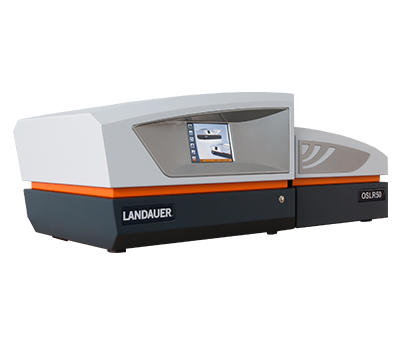
OSLR 50, 250 & 700
Automatic readers
- Worker monitoring
- Area monitoring
- Workplace assessment
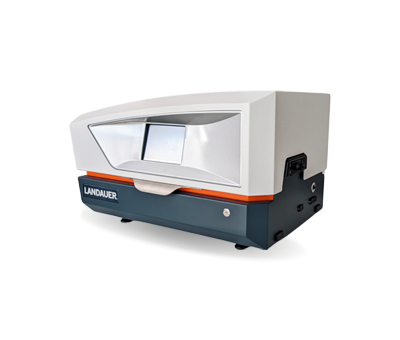
OSLR 1
Manual reader
- Worker monitoring
- Area monitoring
- Workplace assessment
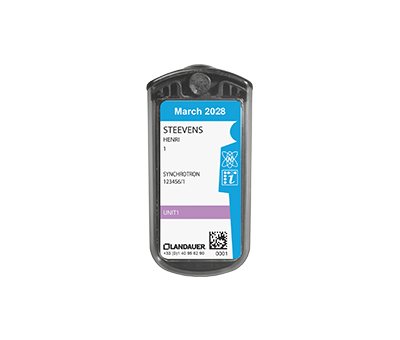
INLIGHT®
- Worker monitoring
- Area monitoring
- Workplace assessment

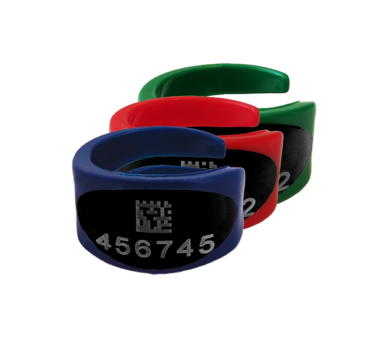
ONYX®
- Worker monitoring
- Workplace assessment
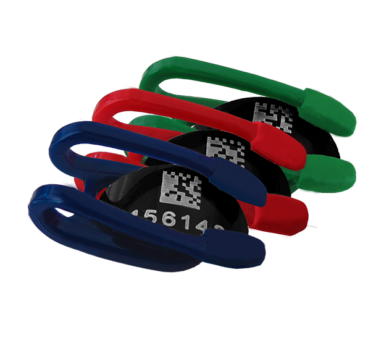
TOPAZ®
- Worker monitoring
- Workplace assessment
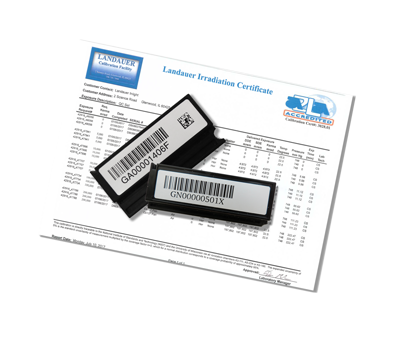
Calibration and control kits
- Worker monitoring
- Area monitoring
- Workplace assessment
LANDAUER provides a complete service
- advice and solutions tailored to your needs
- on-site delivery and commissioning
- training on operation and first-level maintenance
- on-site and factory maintenance
- phone and email support