


Worker radiation protection: what are your duties regarding staff monitoring?
Health
LANDAUER® provides a range of dosimetry services to meet the specific needs of all the areas of the health sector:
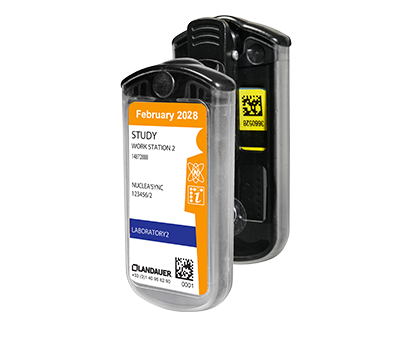
- In conventional radiology, whole-body dosimetry monitoring is required. Due to its excellent energy and angular response from 15 keV, IPLUS® is able to cover all applications in diagnostic radiology, including mammography. In interventional radiology, doses can be particularly significant for the extremities.
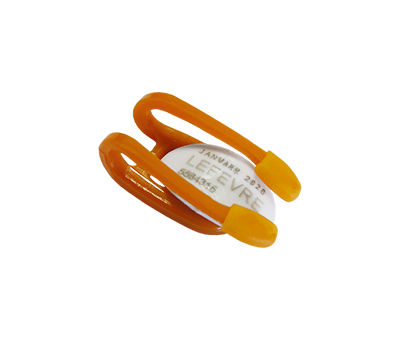
- In interventional radiology, doses can be particularly significant for the extremities (ankle dosimeter and MONORING® dosimetry ring) and eyes(VISION® lens dosimeter ).
- In nuclear medicine, it is important to ensure special monitoring for extremities, including for injection sites where the index and the middle finger may be in contact in direct contact with the injected radioisotope. A VISION dosimeter for lens monitoring can also be necessary.
- In radiotherapy, energies generated by the LINAC are usually high. Due to its excellent energy response up to Emean of 6 MeV (i.e. Emax =18 MeV), IPLUS, provides an accurate and reliable dose measurement. For some applications such as neutron therapy or proton therapy, primary and secondary neutrons are generated, thus imposing a neutron dosimetry monitoring.

Nuclear
LANDAUER provides a range of dosimetry services to meet the specific needs of all the areas of the nuclear sector:
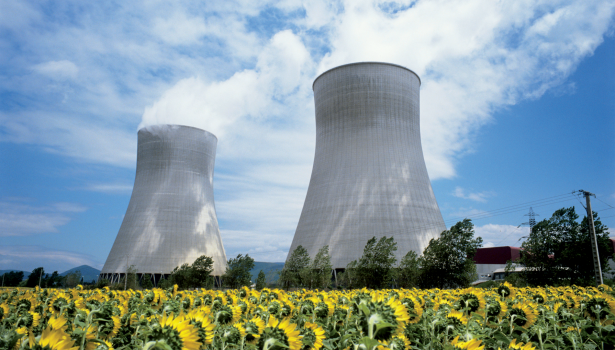
- In nuclear power plants or nuclear propulsion, a whole body dosimetry monitoring is recommended. Measurement of photon, beta and neutron radiation is often required for workers entering a controlled area. Due to its robustness and versatility, IPLUS&NEUTRAK can be used to measure the entire photon (for ex. N16 at 6.6 MeV), beta (Sr90/Y90 at Emax = 2 MeV) and neutron spectrum.
- For some maintenance operations, the monitoring of extremities (dosimetry ring MONORING for photon and beta radiation or IPLUS wrist for photon, beta and neutron radiation) is required. The VISION lens dosimeter is increasingly required as a result of the lowering of dose limits for lenses in some operations such as the replacement or the maintenance of steam generators.
- In the fuel cycle, IPLUS is systematically used for all exposed workers. The IPLUS wrist or MONORING dosimeter may be used for glove box handling operations, and may be supplemented by a VISION dosimeter depending on workstation study results.
Industry
Many areas of industry use radiation sources:
- Non-destructive testing (ex. radiography) allowing control of the metal or solder component of a structure. This technique commonly uses Iridium-192 or Cobalt-60 sources with anactivity able to reach a few dozen Terabecquerels
- Measurement of thickness, density, humidity or composition of different materials and different surfaces with the use of nuclear gauges. Radioactive sources like Cesium-137, Americium-241, Beryllium (neutron emitter), Radium-226 or Cobalt 60 are usually used. These techniques are used in geology, particularly for oil exploration or public works (construction of roads and buildings)
- Transport of radioactive material
- Radiopharmaceutical industry usually producing unsealed radioactive sources for use in nuclear medicine for diagnostic or therapeutic purposes
- Safety inspection of individuals and goods, particularly in critical infrastructures
- Sterilization of mail or food for conservation usually using Cobalt-60 sources and involving food irradiation doses ranging from 30 Gy to 50 kGy
- Industry standards
Given the range of applications, we offer our expertise to advise you on the appropriate dosimetry monitoring. The nature of the radiation source, the isotope, the activity and the state are important parameters.

Research and Education
This area covers research activities in pharmaceutical laboratories, universities, research organisations (for ex. INSERM, CNRS, INRA). The radiation sources used can emit different types of radiation (X, gamma, beta and neutron) and a workstation study is often required to define the appropriate dosimetry monitoring.
LANDAUER guides you through this process.

Dentists, veterinarians, X-ray centers
The French Labour Code requires the implementation of monitoring of workers’ exposure to ionizing radiation, both employed and freelance, through the use of personal dosimeters whenever they are likely to be exposed.
Dental radiology and veterinary radiology are subject to the same radiation protection requirements as other radiology procedures:
For dental activities, more than 50,000 workers were monitored as part of a study conducted by the French national authority. More than 200 among them have received doses higher than 1 mSv.
As for veterinary activities, 36 out of 20,000 workers received doses higher than 1 mSv in the same year.
The percentage of workers exposed to doses higher than 1 mSv, although low, shows however that abnormal exposure cannot be excluded. The dosimeter offers guarantees to employers and employees while providing them with peace of mind, thus enabling them to work in a safe environment.
Our DOSIBOX® pack makes mandatory monitoring easier while saving time. It combines personal monitoring for you and your team, ambient dosimetry and control dosimetry in accordance with the requirements of existing standards and regulations.
The monitoring can be complemented by ring and lens dosimetry monitoring, including in veterinary radiology. It is indeed often necessary to hold the animal during scanning. The proximity of the X-ray generator highly increases exposure, the fingers sometimes directly placed in the beam.


Other areas
The following activities can also require the use of a dosimeter:
- Real estate: real estate experts using lead-based paint analyzers. This type of analyzer helps to determine a risk of exposure to lead, more commonly referred to as Lead diagnosis, mandatory in housing. A Cobalt-57 or Cadmium-109 source of several hundred MBq is used. The use of a MONORING dosimetry ring is recommended on the hand holding the device.
- Use of an X-ray fluorescence metal analyzer: the use of a MONORING dosimetry ring is recommended on the hand holding the device.
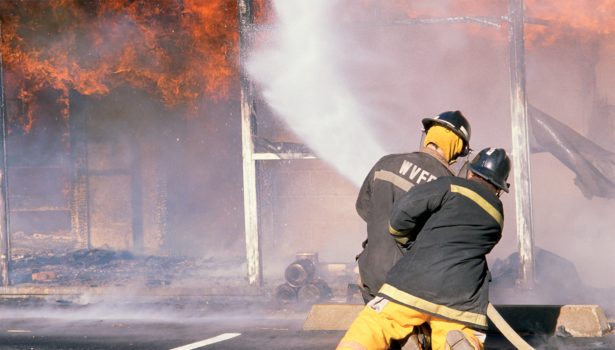
- Crisis management (firemen and civil security).
- Internal and external inspection/quality control in nuclear facilities and health care facilities.
IPLUS®
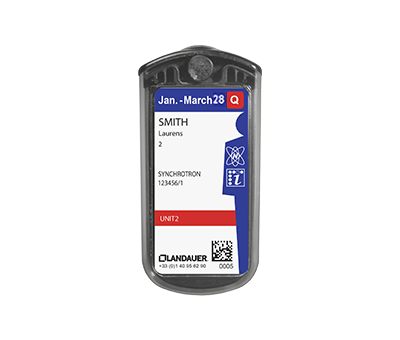
- Personal dosimeter
- Area monitoring
- Workplace assessment
MONORING®
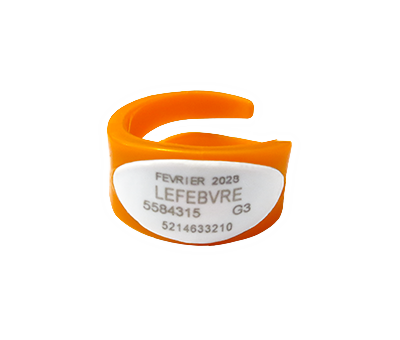
- Personal dosimeter
- Workplace assessment

VISION®
- Personal dosimeter
- Workplace assessment
IPLUS® & NEUTRAK®
- Personal dosimeter
- Area monitoring
- Workplace assessment
TLD chip
- Workplace assessment